Halton Hills · Ontario
Interlock and patios in Halton Hills and the surrounding towns
I build patios, walkways, steps and driveways in interlock and natural stone — and I repair the ones that have sunk. Georgetown, Acton, Milton, Erin, Guelph and Rockwood.
What I do
New installation
Patios, walkways, driveways, aprons and landings in concrete paver or slab. I set the layout on site with you before anything comes off the pallet.
Repair and relay
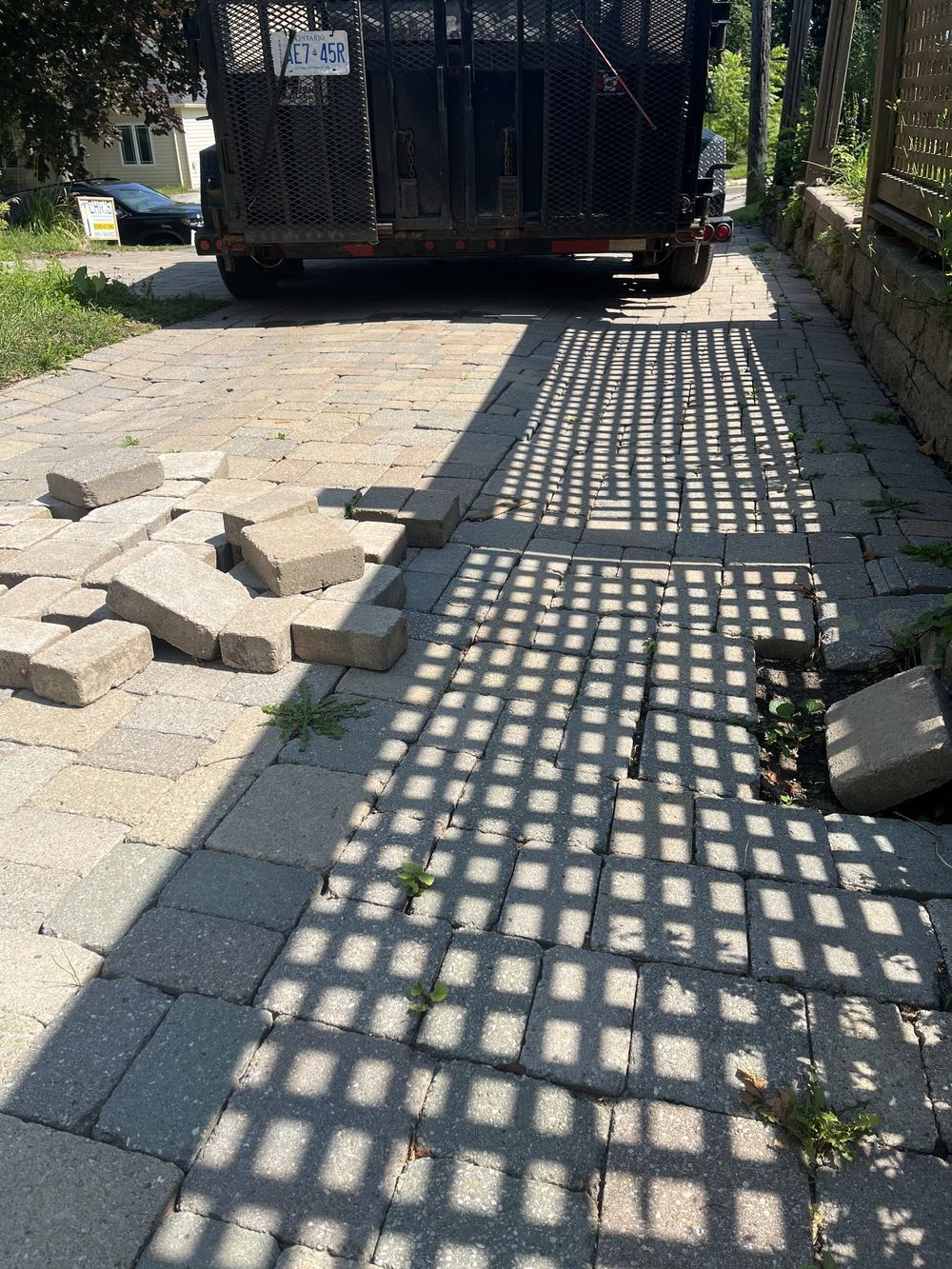
Sunken, heaved or shifted interlock lifted, the base rebuilt and the same stone put back level. Usually far less than a new installation.
Walkways
Front walks, side yards and paths to a deck or shed, cut to a straight or curved edge and tied cleanly into asphalt or concrete.
Steps and landings
Paver or slab steps with solid risers, built to an even rise so nobody has to guess at the last one in the dark.
Patios
Seating and dining patios, fire pit areas and pool surrounds, laid with a border course so the field stays locked in.
Natural stone
Flagstone, sandstone slab and natural stone steps. Heavier material, hand-set piece by piece, for a look that isn't on every street.
Repair and relay
If the stone is fine, you don't need new stone
Most of the sunken interlock I look at doesn't need replacing. The pavers are sound — it's the base underneath that gave out. I lift the stone, stack it, dig out and rebuild the base properly, then relay the same pavers level and re-sand the joints.
That's a much smaller job than tearing everything out and starting over, and it costs you a lot less. It's also the honest answer, which is why I'd rather it have its own place on this page than sit buried under "installation".
- Settled patios and walkways brought back level
- Heaved sections dug out and rebuilt
- Crept edges restrained and re-cut
- Joints re-sanded and locked against weeds
- Replacement stone only where yours is broken
How I build it
Everything that decides whether a patio is still flat in five winters is buried before the first stone goes down. You can't see it in a photograph, and it's the whole difference between my price and a cheap quote.
01
Excavation
I dig out the full footprint well past the finished depth of the stone — deeper for a driveway than a walkway — and cut the subgrade to drain away from the house. If there's soft clay or old fill down there, it comes out rather than getting buried.
02
Base and compaction
Crushed granular base goes in and gets compacted in lifts, not all at once. A thick layer dumped and rolled over the top looks the same on day one and settles in hollows by spring. Lifts are the boring part that decides everything.
03
Bedding layer
A thin, screeded bedding layer over the compacted base — enough to set the stone, never enough to fix a bad base. Bedding sand is not a levelling material, and using it that way is the most common shortcut I get called out to repair.
04
Laying
Stone laid off a string line to keep the pattern true, cuts made with a saw rather than snapped, and a border course run around the perimeter.
05
Edge restraint
The perimeter gets restrained so the outside row can't creep outward. Once one edge row moves, the joints open behind it and the whole field starts to travel.
06
Polymeric sand
Joints swept full, the surface cleaned off, then the sand set with water so it locks. Locked joints keep weeds out, keep sand from washing away in a hard rain, and keep each stone carrying its neighbours.
Why the base decides everything
Water is what wrecks a patio here. It gets into a thin or poorly compacted base, freezes, expands and lifts the stone, then thaws and leaves a void behind. Do that a few dozen times over three winters and you get the humps and dips you see on driveways all over town. A deep base compacted in lifts and graded to drain gives the water somewhere to go instead of somewhere to sit.
Skipping depth, dumping the base in one lift or using bedding sand to level a bad subgrade all save a day and look identical when the job is swept clean. That's why the shortcut is so easy to sell — and why I put a two-year warranty on my new installations. I'm warrantying the part you can't inspect.
Project examples
View the full gallery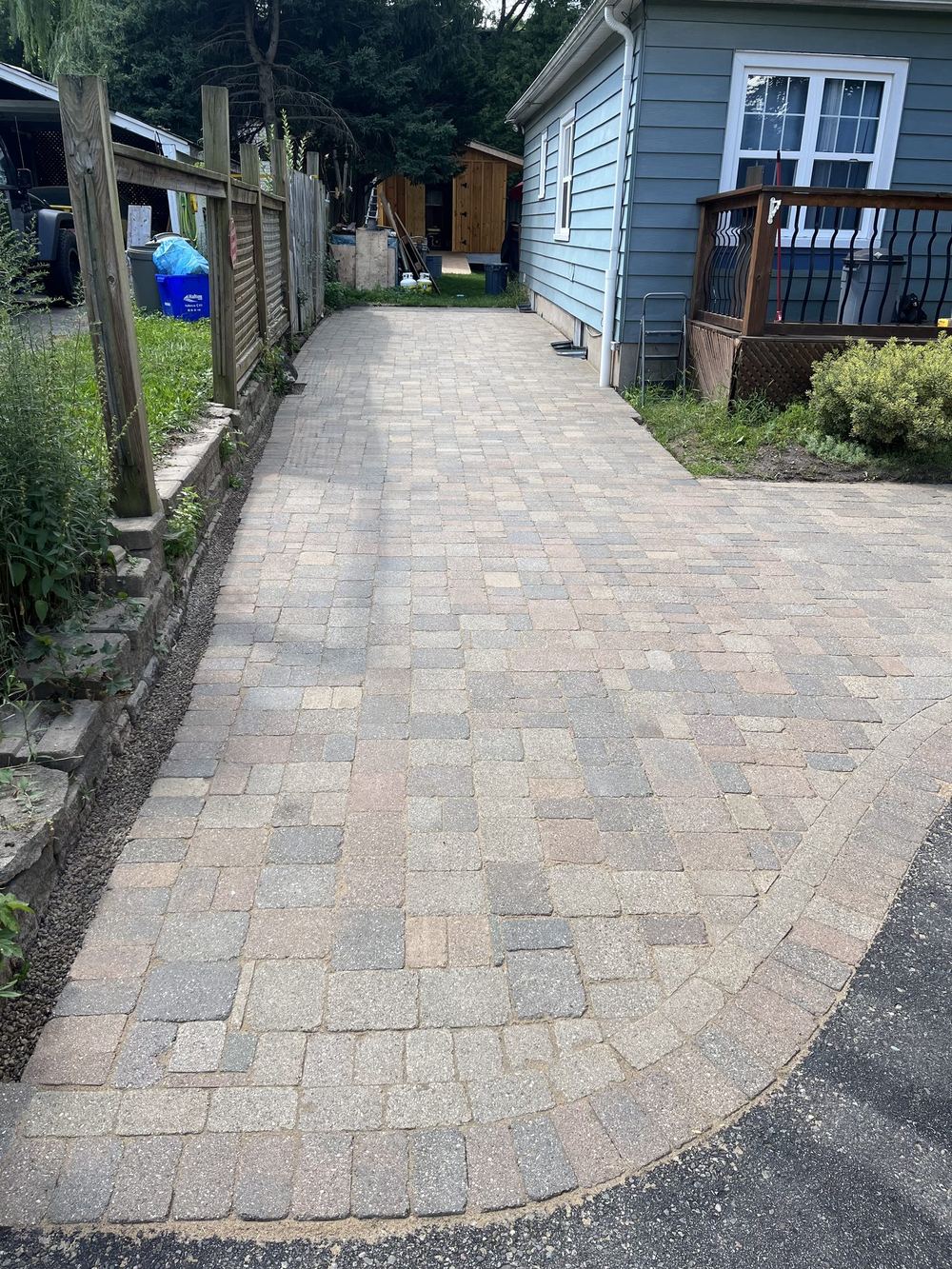
Walkway restoration, Halton Hills
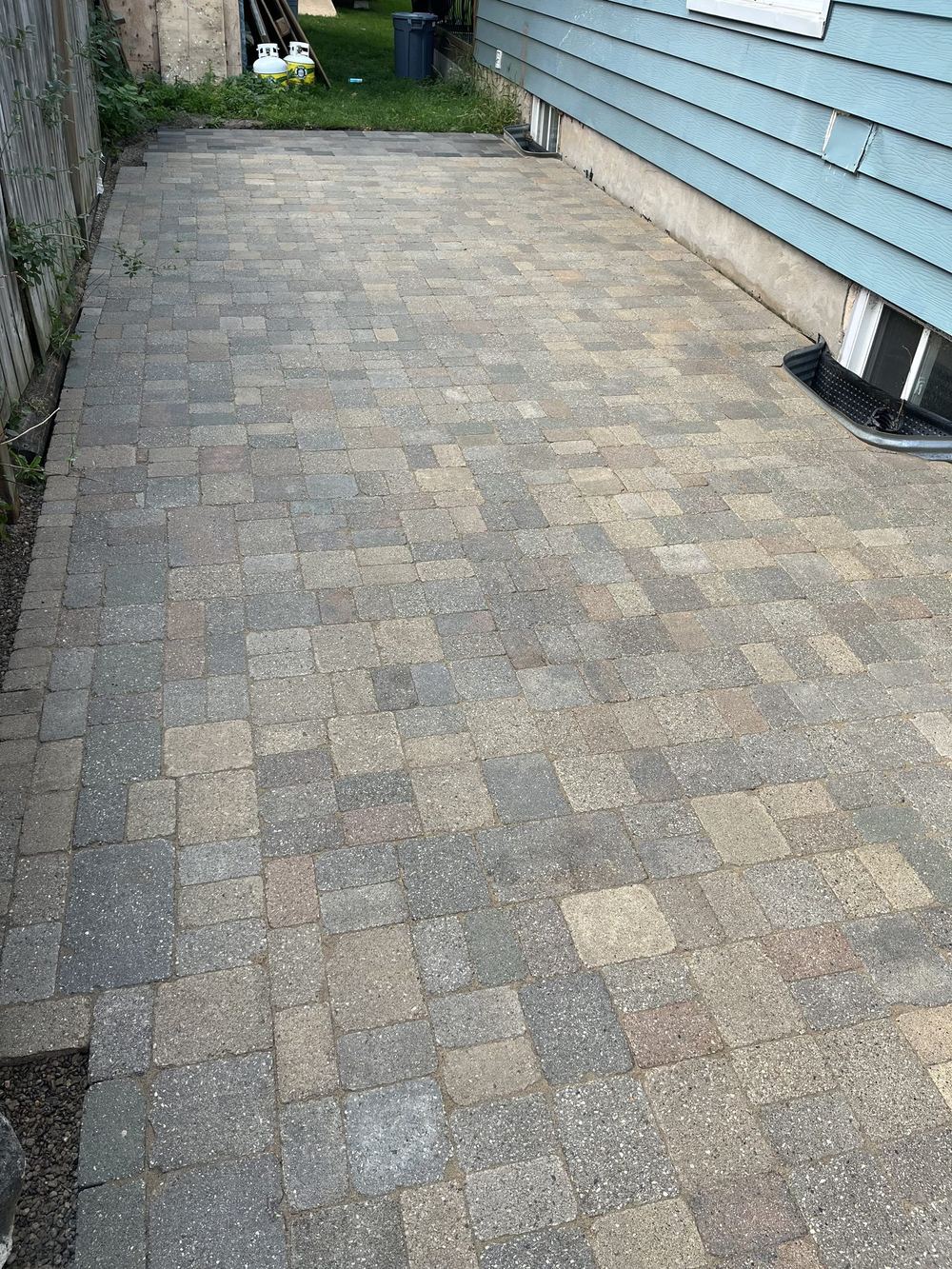
The original interlock had settled and the joints were full of weeds. I lifted the stone, dug out and rebuilt the base, then relaid the same pavers level and added an apron where the walk meets the asphalt.
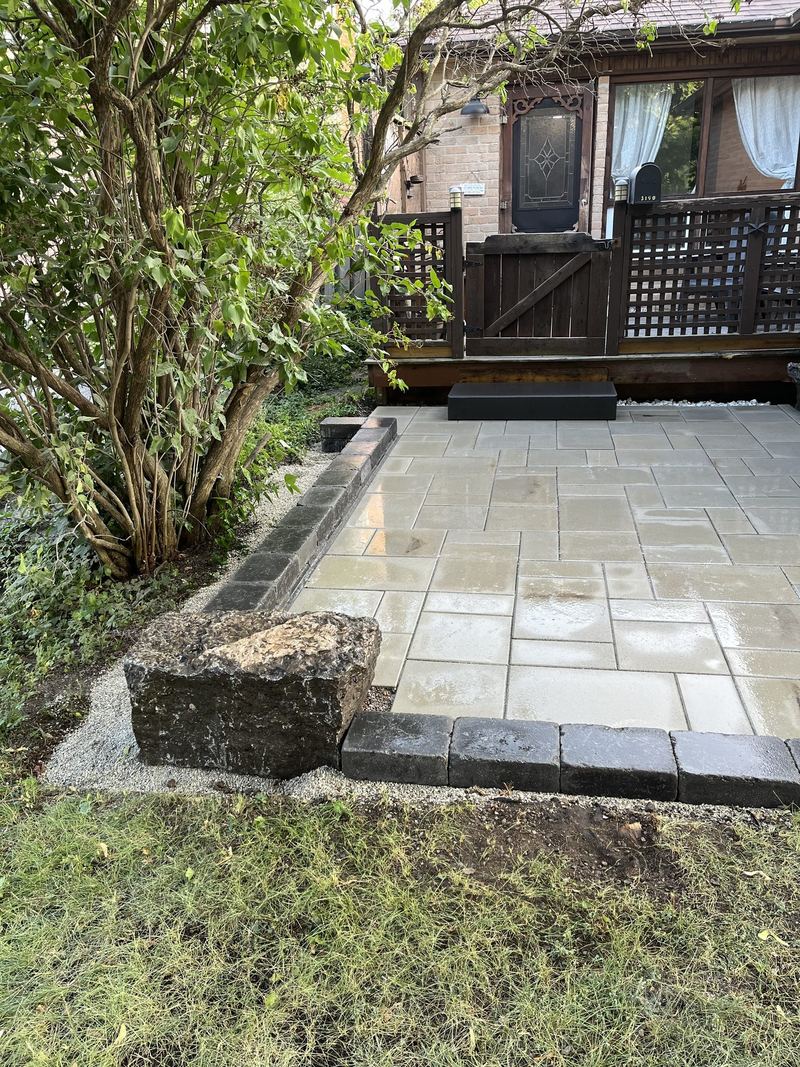
Slab patio and stone edging
Large-format sandstone slab in a running pattern, held with a charcoal soldier course and heavy stone along the low side to hold the grade back off the patio.
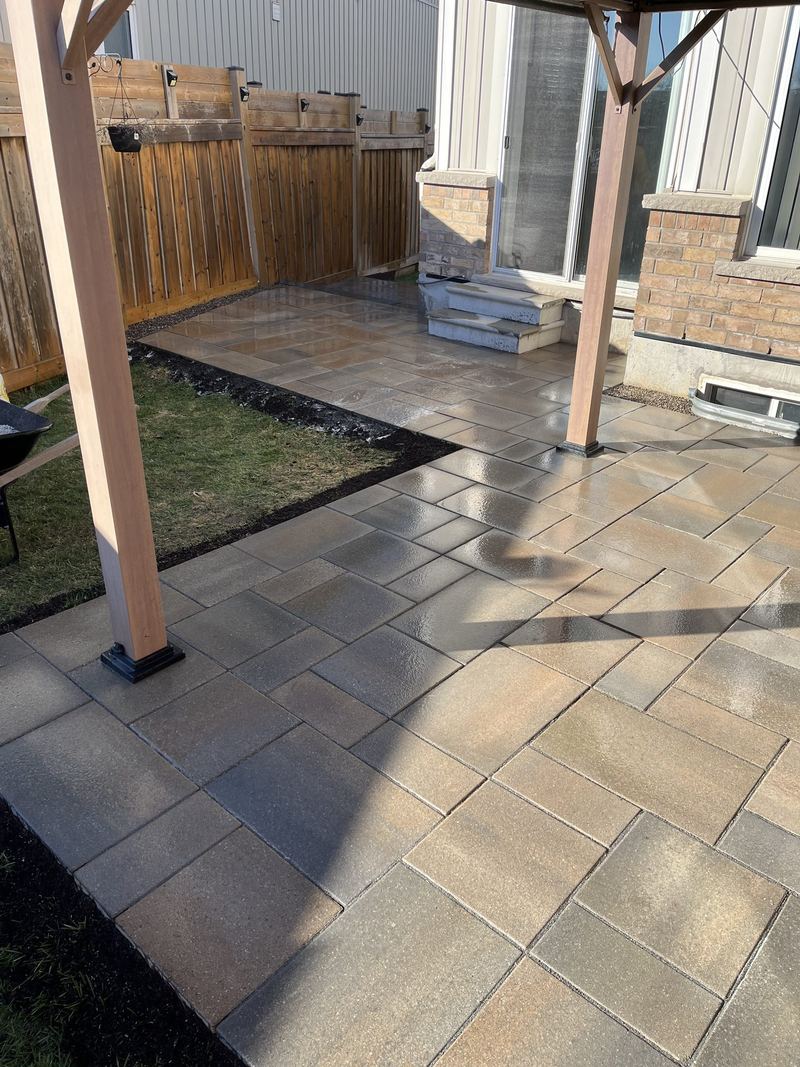
Pergola patio
A dining patio in cobble paver under an existing pergola. The base had to be right under the posts, so the field was laid tight and level to the fence with a contrasting border.
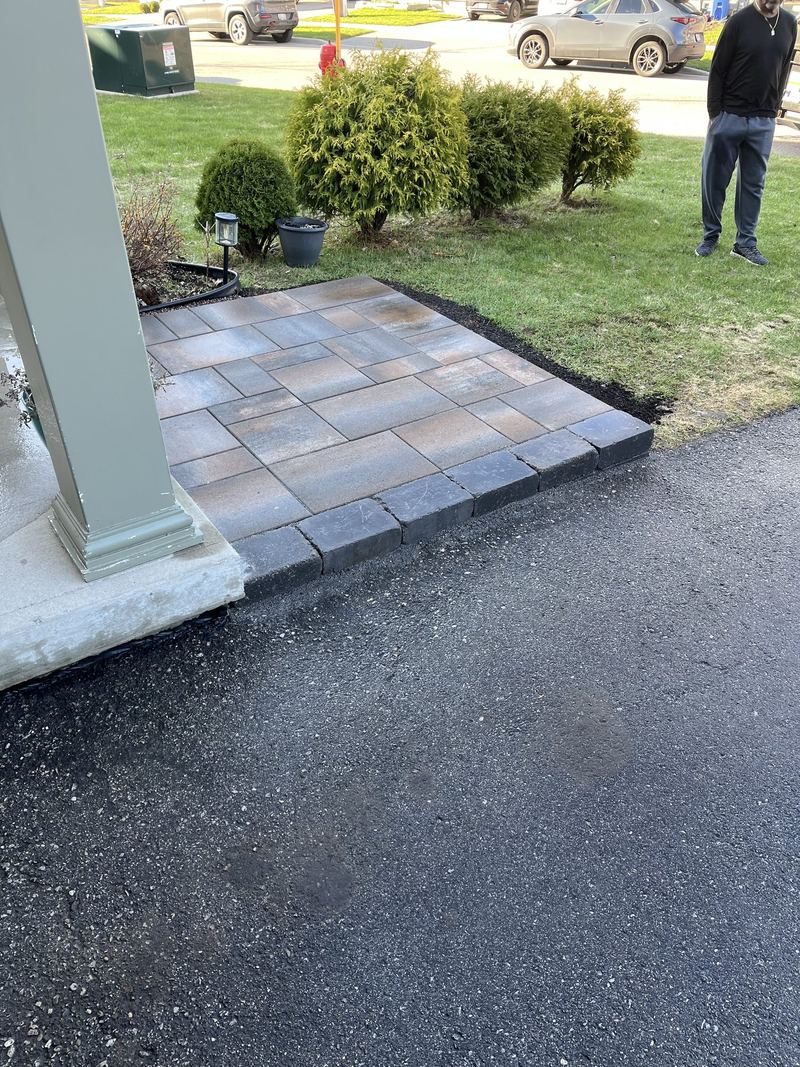
Front entry steps and landing
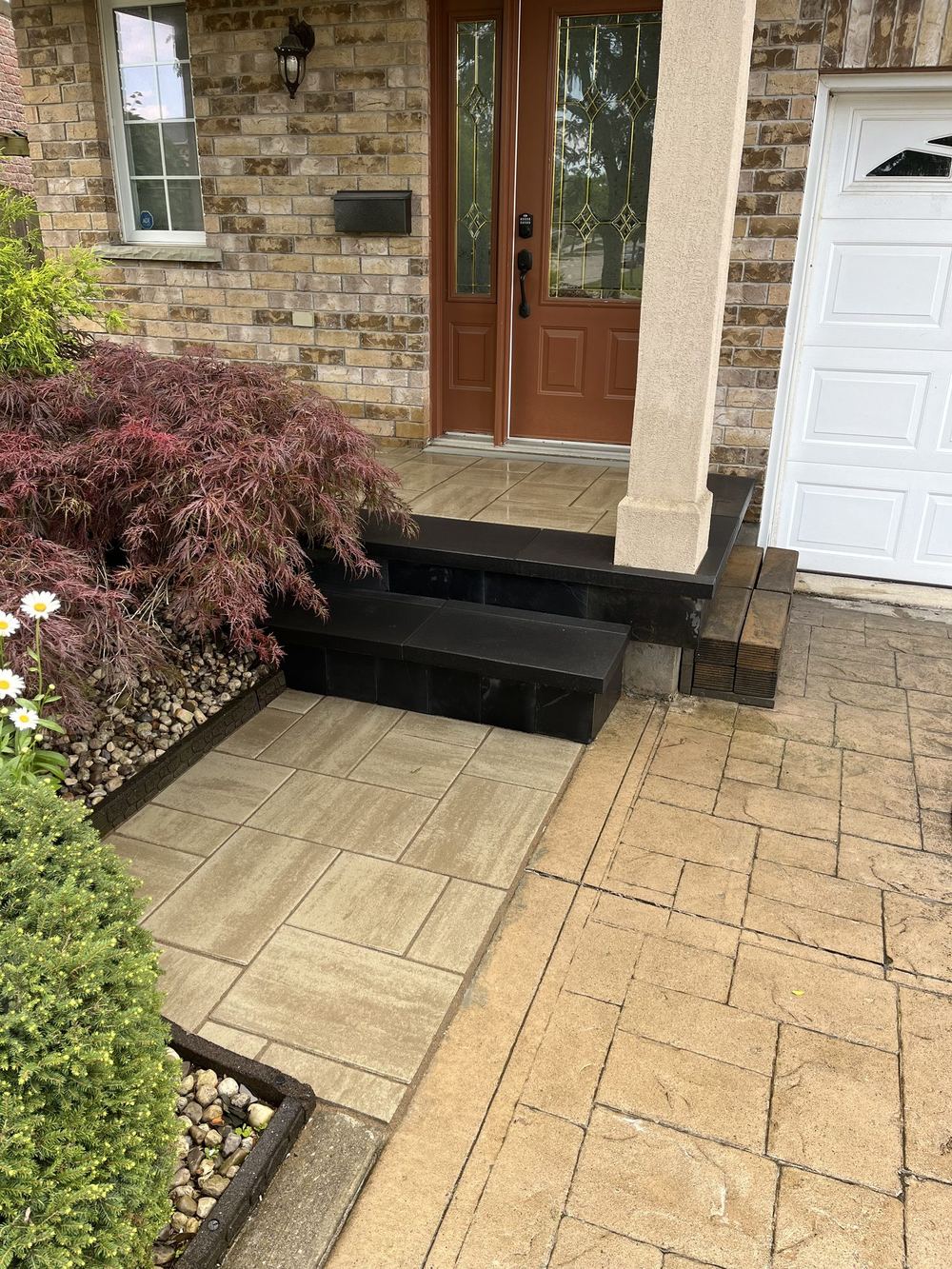
A porch landing and steps in paver, tied through a walkway into the driveway so the whole front approach reads as one piece instead of three patches.
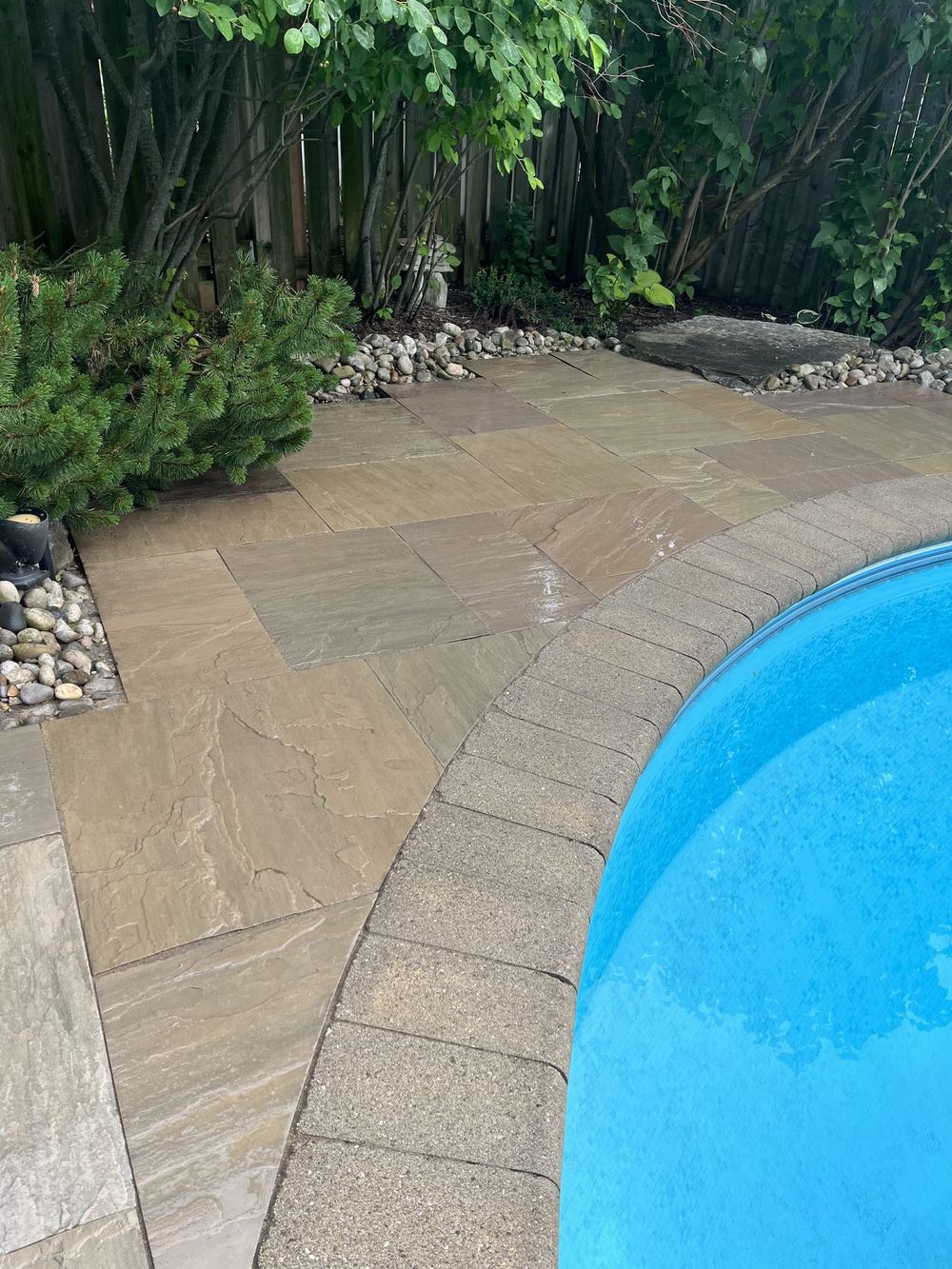
Pool deck in natural sandstone
Natural sandstone slab hand-set around a pool, cut to follow the curve of the coping with a river-rock strip at the garden edge for drainage.
Questions
What does an interlock driveway cost?
I quote it after I've seen it. Base depth, access for machines, how much old material has to come out and the stone you pick move the number far more than square footage does, so any figure I gave you over the phone would be a guess. Estimates are free, done on site, and the price comes from me — the person doing the work.
How long does a job take?
Most walkways and repairs run one to three days. Patios and driveways are usually three to five, longer if there's a lot of excavation or the material has to be carried in by hand. You get a start date and a realistic finish date before anything gets torn up.
Can you match my existing stone?
Often, yes. Many paver lines are still in production, and if yours isn't I'll usually reuse your own stone in the visible areas and put anything new where it's least noticeable. If a clean match isn't possible I'll tell you that at the quote rather than after.
When is it a repair versus a replacement?
If the pavers themselves are sound and it's the base that failed — settling, low spots, an edge that has crept — it's a repair, and that's most of what I see. Replacement makes sense when the stone is spalling or broken up, when the layout no longer works, or when the area needs a different depth of base for how it's being used, like a walkway now being driven on.
Patio or walkway on your list?
Get a quoteNew install or a repair and relay. Estimates are free and done on site.